
The Complete Rose Variety Guide: Freedom Roses, Garden Roses, and How to Spot Quality That Lasts
Roses are among the most recognized flowers in the world, yet they are also among the most misunderstood. To many people, a rose is simply "red," "pink," or "white." To a professional florist, a rose is a carefully selected variety with a specific bloom shape, petal structure, stem strength, fragrance level, and vase-life behavior. That is why two bouquets can look similar in a photo but perform very differently on a dining table three days later. This article is written as a rose-wiki style guide: it explains what rose varieties are, why florists frequently choose certain types (especially Freedom roses), how to visually tell the difference between premium and lower-grade roses, and which varieties tend to last longer and why. If you love roses—or buy them for people you love—understanding these details makes every purchase smarter and every bouquet more meaningful.
What "rose variety" really means
A rose variety is a specific cultivated type of rose bred for a consistent set of traits. Those traits can include bloom size, petal count, the speed at which the rose opens, stem thickness, disease resistance, thorn density, color stability, fragrance strength, and—most importantly for cut flowers—vase life. While the rose genus (Rosa) includes many species, the cut roses you see in floral shops are usually cultivated varieties selected for beauty and performance. In practical terms, "variety" is why one red rose opens into a large, symmetrical bloom with thick petals, while another red rose opens unevenly, droops early, or sheds petals quickly. Variety is also why some roses look incredible in the first hour but disappoint by day two, while others keep their posture and elegance for a full week.
It helps to think of rose varieties like apple varieties. An apple is an apple, but Honeycrisp, Gala, and Granny Smith are clearly not the same experience. They differ in texture, sweetness, firmness, and how well they store. Roses are similar: the variety determines how the bloom behaves, how it feels, and how it lasts. That is why florists talk about rose varieties the way chefs talk about ingredients: you can cook with "tomatoes," but a chef chooses a specific tomato because the final result depends on it.
Freedom roses: why florists trust them
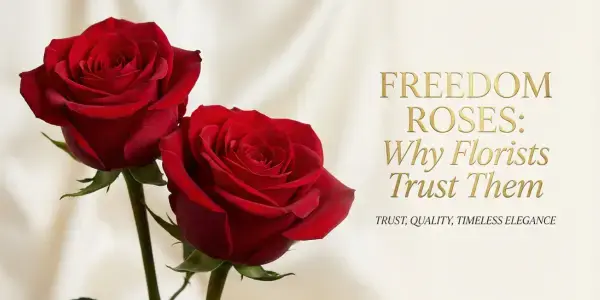
If you've ever heard florists mention a rose name as if it were a brand, it was probably Freedom. Freedom roses are one of the most widely used premium red rose varieties in professional floral design, especially for high-expectation occasions such as Valentine's Day and anniversaries. The reason is simple: Freedom roses reliably deliver a rich, true red color, strong stems, and a bloom that opens beautifully without falling apart too quickly. In the world of cut roses, consistency is luxury, and Freedom roses have earned a reputation for showing up the same way again and again.
Freedom roses are typically known for a large, classic rose shape with balanced symmetry as they open. Their petals tend to be thicker than many standard red varieties, which helps them retain moisture longer and resist bruising during handling. Thick petals also help the rose open more gradually, which usually translates to longer enjoyment in the vase. Many Freedom roses are grown at higher elevations in climates where cooler nights slow down growth, producing denser blooms. Slower growth can mean stronger cell structure, and stronger cell structure is one of the behind-the-scenes reasons a rose can keep its "fresh" look for more days.
In short, Freedom roses are frequently used because they combine visual impact with dependable performance. They are not just photogenic; they are built to last, which matters when a bouquet is meant to create a moment and then keep that moment on the kitchen counter for days afterward.
Common florist rose varieties you'll see often
While Freedom roses dominate the premium red category, professional florists use a range of varieties depending on color palette, season, and design style. Different varieties create different moods, and they also behave differently once they leave the cooler and enter a warm home. Below are several commonly used rose types you may encounter, along with the practical differences that customers actually notice.
Explorer (red)
Explorer roses are another popular red option. They often open a bit faster than Freedom roses, which can make a bouquet look full and dramatic sooner. That fast-opening behavior can be useful for same-day gifting when you want immediate fullness. However, faster opening sometimes means the bloom reaches peak stage earlier, which can shorten the overall vase display time compared with slower-opening premium varieties.
Vendela (ivory/cream)
Vendela roses are known for their creamy ivory color and refined, elegant look. They are frequently used in classic, soft palettes and are popular when you want romance without the intensity of bright red. Vendela roses are also commonly chosen for timeless styles because their color reads as upscale and calm. In many cases, they can offer strong vase life when handled well, though environmental factors like room temperature still matter a lot.
Playa Blanca (white)
Playa Blanca roses are often recognized for crisp white petals and a clean, modern presentation. They are frequently used in contemporary arrangements and formal designs because the white feels bright and structured. White varieties are also useful for mixed arrangements because they lift the overall palette visually.
Pink Mondial (soft pink)
Pink Mondial roses are appreciated for their gentle blush tone and romantic softness. They are often chosen for admiration, thank-you gifting, birthdays, and celebrations where the message is warm and affectionate rather than purely romantic. The bloom style is often graceful and classic, and the color tends to photograph beautifully in natural light.
Spray roses (multiple small blooms per stem)
Spray roses are a category rather than a single variety, but they deserve mention because they create a different look entirely. A spray rose stem branches into several smaller rose blooms, which adds texture and fullness quickly. Spray roses are frequently used to add a garden-like feeling, soften edges, and create a layered, abundant design. They can also be helpful because if one small bloom fades, others on the stem may still look fresh, maintaining the bouquet's overall look.
Garden roses vs standard roses
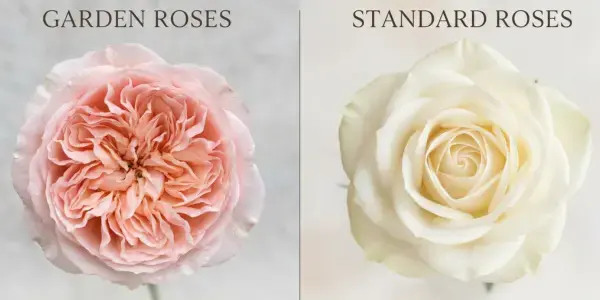
One of the biggest points of confusion for customers is the difference between garden roses and standard roses. Garden roses are bred to resemble old-fashioned heirloom roses. They usually have more petals, a softer, ruffled form, and often stronger fragrance. Garden roses can look extraordinarily romantic—like something from a classic painting or an English garden. They are often used for premium, high-style designs and special projects because they create an instantly lush impression.
Standard roses, by contrast, are bred for performance and consistency. They tend to have a more uniform bloom shape, stronger stems, and longer vase life, which makes them excellent for delivery-based floral work. Many standard varieties (including premium ones like Freedom) are selected because they travel well, open predictably, and hold their look longer under typical home conditions.
Garden roses can be more delicate. They often have a shorter vase life and can be more sensitive to temperature swings. That does not mean garden roses are "worse"—they are simply designed for a different experience. If your goal is maximum longevity, standard premium roses are often the best choice. If your goal is fragrance and a luxurious, old-world aesthetic, garden roses can be unbeatable when handled with care.
Which roses last longer and the real reasons why
When customers ask which roses "last the longest," they are really asking about a combination of biology and logistics. Vase life is shaped by how the rose was grown, when it was cut, how it was stored and shipped, how it was hydrated at the floral shop, and how it is cared for at home. Variety matters, but so does the entire chain of handling from farm to vase.
That said, premium varieties often last longer because they are bred and grown for durability. Thick petals generally retain moisture better and resist bruising. Strong stems support the bloom as it opens. Roses grown in cooler climates or higher elevations often develop denser structure because growth is slower, which can improve performance after cutting. Another factor is harvest stage: roses cut too tight may struggle to open fully, while roses cut too open may peak quickly and fade earlier. The "sweet spot" harvest stage helps roses open gradually in your home, extending the enjoyment window.
In practice, many florists find that premium red varieties like Freedom frequently offer excellent vase life when handled correctly. Cream varieties like Vendela and crisp whites like Playa Blanca can also perform strongly, especially if the stems were processed and hydrated properly right after arrival. If you ever notice roses lasting unusually long, that is often a sign of both a good variety and strong professional handling at the shop level.
How to spot the difference: quality checklist
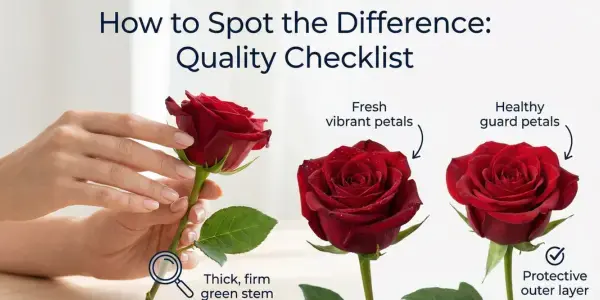
You do not need to know variety names to recognize quality. You can often spot a premium rose by using a simple visual and tactile checklist. First, look at the stem: premium roses tend to have straighter, sturdier stems that feel firm rather than soft. Next, look at the head: a healthy rose head should feel supported and upright, not wobbly or heavy. Then examine the outer petals: some roses have "guard petals" that look slightly imperfect because they protected the bloom during shipping. That is normal. What you want to avoid is widespread browning, mushy petal texture, or a head that is already fully blown open at purchase time (unless that is intentionally the style you want for immediate impact).
Watch how the rose opens. Premium roses often open gradually and symmetrically. Lower-grade roses may open unevenly, with one side expanding faster, or they may drop petals early. Also pay attention to petal thickness and feel: thicker petals generally indicate better hydration retention and greater resistance to bruising. Finally, scent can be a clue but not a guarantee: some high-performance roses have mild fragrance, and some fragrant roses are more delicate. The best approach is to combine multiple signals rather than relying on one trait.
How professional designers choose roses for real deliveries
Professional floral designers choose roses based on what will happen after the bouquet leaves the shop. A rose that looks perfect in a cooler may behave differently in a warm office lobby, a sunny kitchen, or a doorstep delivery in winter. Designers consider the season, the delivery distance, the expected time until the recipient sees the flowers, and the emotional importance of the occasion. For high-stakes moments like Valentine's Day, florists typically choose varieties with proven reliability because customers are not just buying flowers; they are delivering a message. That message should arrive intact, beautiful, and worthy of the moment.
Designers also consider compatibility within an arrangement. Some roses open faster and can overshadow slower blooms if paired incorrectly. Some varieties have larger heads and need stronger supporting stems. Some colors photograph differently depending on lighting, which matters more than ever in a world where recipients often share their flowers in photos. These are the behind-the-scenes decisions that separate a "nice bouquet" from a bouquet that causes an actual reaction—surprise, joy, and that immediate urge to send a thank-you message.
Color, variety, and what customers actually feel
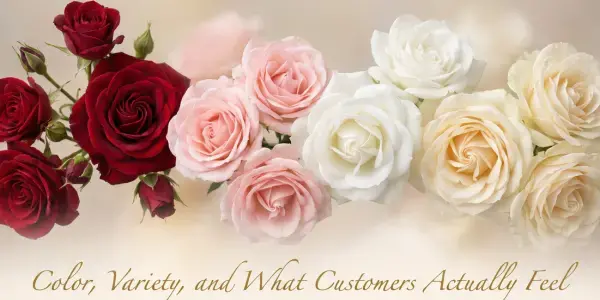
Customers often choose roses by color first, and that makes sense because color is emotional. Red reads as romance, devotion, and intensity. Pink often reads as admiration, sweetness, and gratitude. White can feel pure, peaceful, and elegant. Cream and ivory can feel refined and timeless. But here is what many people do not realize: variety can influence how a color feels. A deep red Freedom rose feels classic and confident. A brighter red variety can feel lively and youthful. A soft blush Pink Mondial can feel tender and modern.
When choosing roses, consider both the color meaning and the variety's characteristics. Red roses signal romance and passion, pink conveys admiration and gratitude, white represents purity and new beginnings, and yellow expresses friendship and joy. But within each color category, the variety determines how long that message stays clear and beautiful. A premium variety ensures the color remains vibrant and the bloom stays elegant throughout its vase life.
How to make roses last longer at home
Even the best rose variety needs proper care to reach its potential. Start with a clean vase and fresh, lukewarm water mixed with flower food. Cut stems at a 45-degree angle under running water to prevent air bubbles from blocking water uptake. Remove any leaves that would sit below the waterline, as submerged foliage can promote bacterial growth that shortens vase life.
Place your roses in a cool location away from direct sunlight, heating vents, and fruit bowls (ripening fruit releases ethylene gas that accelerates flower aging). Change the water every two to three days, recutting stems each time. If petals start to droop, try submerging the entire rose head in cool water for an hour to rehydrate. With proper care, premium varieties like Freedom roses can often last a full week or more, maintaining their beauty and structure throughout.
How Flowers by Eva creates "wow" rose moments
At Flowers by Eva, we understand that roses are not just flowers—they are messengers. That is why we select varieties based on both beauty and performance. When you order roses from us, especially for important occasions, we choose varieties that we know will arrive looking stunning and continue to impress for days afterward.
Our designers work with premium varieties like Freedom roses for red arrangements because we know they deliver consistent quality. We also carefully consider variety compatibility when creating mixed arrangements, ensuring that faster-opening roses complement slower-opening blooms rather than overshadowing them. Every rose is processed with care, properly hydrated, and handled to maintain its quality from our shop to your recipient's door.
Explore our rose collections: Premium Roses at Flowers by Eva.
Quick FAQ
What makes Freedom roses special?
Freedom roses are premium red roses known for their rich color, thick petals, strong stems, and reliable vase life. They are bred and grown for consistency, making them a trusted choice for professional florists, especially for important occasions.
Do garden roses last as long as standard roses?
Generally, no. Garden roses are bred for fragrance and romantic appearance, while standard roses (including premium varieties like Freedom) are bred for durability and longer vase life. If maximum longevity is your priority, standard premium roses are typically the better choice.
How can I tell if roses are high quality?
Look for firm, straight stems; thick, healthy petals; and blooms that are partially open (not fully blown or too tight). Premium roses should feel sturdy and open gradually and symmetrically. Avoid roses with widespread browning, mushy texture, or heads that feel wobbly.
Which rose color lasts the longest?
Vase life depends more on variety and care than color. However, premium red varieties like Freedom roses are often chosen for their combination of visual impact and durability. Proper care—clean water, flower food, and cool placement—matters more than color for longevity.
Why do some roses open faster than others?
Opening speed is a characteristic of the variety. Some roses, like Explorer, open quickly for immediate fullness. Others, like Freedom, open more gradually, which can extend the overall enjoyment period. The harvest stage also affects opening speed.